One of my favorite movies is Forrest Gump, released in 1994 and starring one of my favorite actors of all time, Tom Hanks. Filled with many themes, it is the story of a man who has different gifts than the “normal” person, but has an authentic story told with humor, love and destiny. If you haven’t seen it, you should check it out–it’s an all-time American movie classic. There are several quotes from the movie that I really like, but my favorite one is, “Stupid is as stupid does.” This one phrase, rightly interpreted, can be fitting for an array of behaviors. Do you remember when the word ‘stupid’ was actually a “bad word” to use? If you were born after the 90s, you probably don’t know what I’m talking about. But I remember when the word ‘stupid’ was highly offensive. Originally used in tandem with a collection of words by medical professionals, it was used to classify people who held certain, below normal IQs. Over time, it turned into an offensive epithet used in everyday language. Eventually, some refused to use it. If you had parents like mine, you probably were not allowed to use that word haphazardly. But I don’t feel it carries as much weight as it used to carry. The dictionary defines the word stupid as, “acting in an unintelligent or careless manner.” By this definition, I have a long list of stupid things that I’ve said and done – but I won’t take up hours of your time.
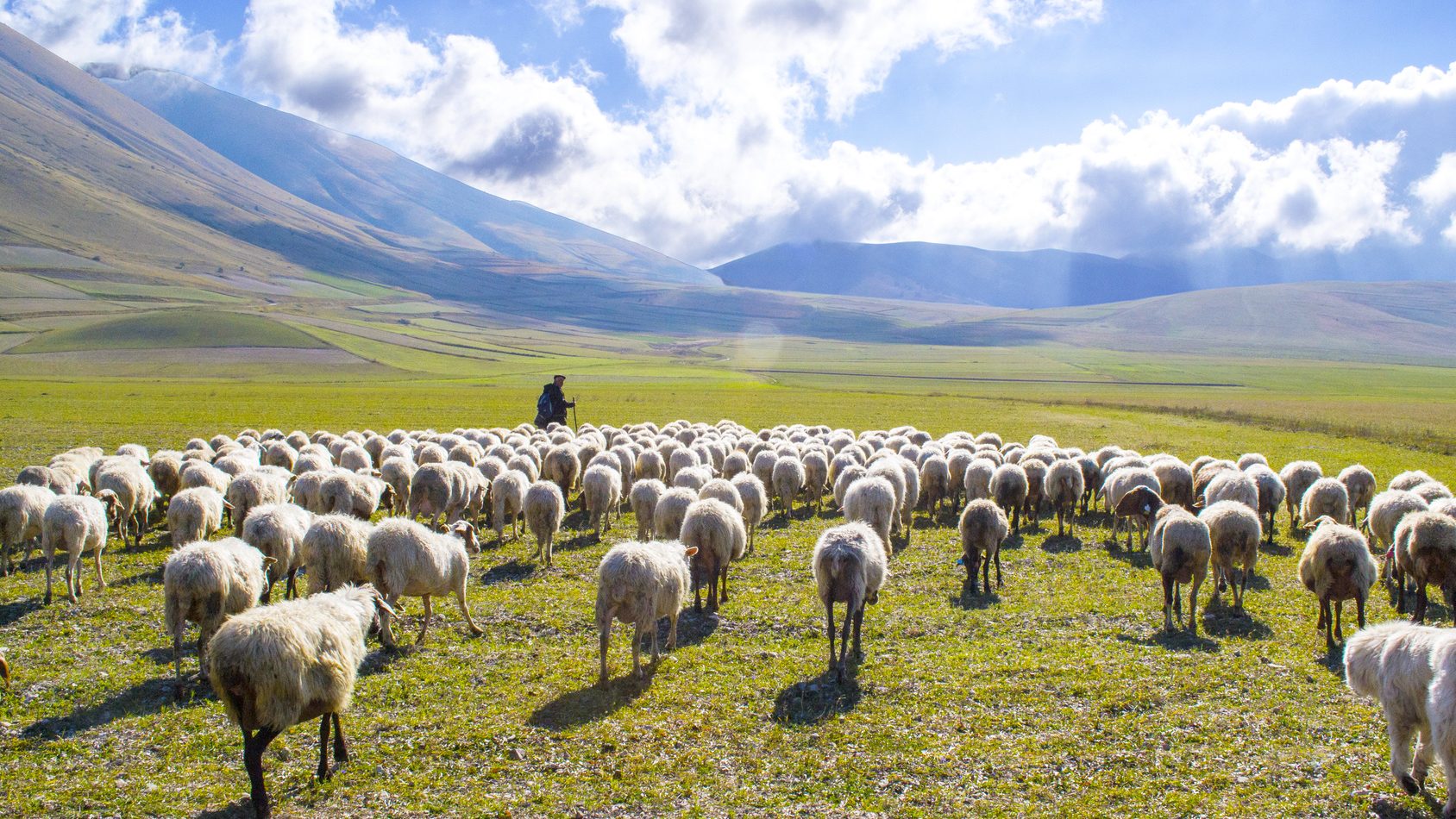
As I reflect on the word and the various ways it can be used, I am reminded of its usage in the context of describing sheep (yes, like the little lamb that Mary had). If you know anything about sheep, you’d probably agree that the word ‘stupid’ is a prerequisite for being one. They are so stupid that unlike other animals who run away from danger, sheep actually run toward it. You can try to call them brave all you want, but unfortunately this is not the reason they do so. A word of advice: If you have a sheep, make sure to stay away from cliffs because they will just go right off the edge. This is why the shepherd carries a staff to guide and protect them in this regard. A few other things you should know about sheep: first of all, they are one of the few animals without a defense system and are helpless without a shepherd; they are notorious for following their leader, regardless of how dangerous or foolish that may be; and they know who their shepherd is by the sound of his voice. These are just a few of the many reasons why a shepherd is necessary for their care and well-being. While sheep were a major source of income in agrarian societies, shepherding was one of the lowliest occupations. The humble status of a shepherd may be one reason Jesus chose that title when He described His relationship with us (Jn 10:14). Identifying as a Shepherd demonstrated Christ’s humility and emphasized the fact that He came for even the lowliest of the low (Matt. 11:29).
When we consider the nature of sheep and their relationship to their shepherds, we get a helpful illustration in understanding who we are as followers of Jesus Christ. Isaiah referred to us as wandering sheep in his prophecy centuries before Jesus would come (Isa. 53:6). Later, Jesus referred to himself as a shepherd, and to us as his sheep (Jn. 10:11-18). In our industrious and hi-tech society, it might sound strange for a person to be compared to a shepherd. But the people listening to Jesus were very familiar with who a shepherd was and what he did. God first compared the Israelites to sheep and later applied that label to all who are called by His name (Ezek. 34; Matt. 10:6; 15:24). God’s people, like sheep, are helpless without a shepherd (Matt. 9:36; Num. 27:17). And the first line of Psalm 23 reflects the wonderful truth that God Himself is our Defender (Ps. 23:1). Without the Lord our Shepherd, we are helpless when our enemy Satan attacks (2 Thess. 3:3). So, while it’s a strongly negative word, when we view stupidity through the biblical lens, it takes on a positive meaning. Jesus said he came for the sick and not the healthy (Mark 2:17). Therefore, as a prerequisite, we should approach God in this way by humbly admitting our state. We’re often stupid sheep who do not actually know what is best for us. In fact, when left to our own devices, we would choose exactly what is detrimental rather than beneficial for us. However, when we admit our stupidity, we take a huge step toward being cared for by our Shepherd. This is what repentance looks like for anyone who wants to say yes to the offer of life and care that Jesus offers. Through humility and repentance, we can position ourselves to receive salvation in Christ by faith, and be justified before God (Rom. 5:1). In my walk with the Lord over the years, He has graciously brought me to the realization of how stupid a sheep I am. This realization has humbled me, and made me very grateful to have a Good Shepherd who not only has my best interests in mind, but also leads and guides me (Ps. 23:2-3).
Sheep are significant throughout the Bible, and we can learn a lot about God and His dealings with humanity by understanding their nature. They teach us about ourselves and our helplessness without Christ. They also teach us about God and His desire to deal tenderly with us (Isa. 40:11). God compares himself to a shepherd because it is a job that requires constant attention and care. We are provided this through Jesus, who said he wasn’t just an ordinary shepherd. Rather, he was a sacrificial shepherd who spares his sheep by laying down His life for them (Jn. 10:15). When we study the ways sheep are used as teaching tools in the Bible, it helps us better understand ourselves in relation to our Good Shepherd.
So, now that we have our terms defined, explored the significance of sheep in the context of scripture, and seen their connection to humankind, would you consider yourself stupid in the sight of God? I know I definitely am, and that’s exactly why I need a Shepherd to continuously help and care for me. Thanks be to God for providing us this Good Shepherd, Jesus, who loves us in spite of our stupidity. This love ultimately led Him to the cross, where he laid down His life for us, and now we are clothed in His righteousness (2 Cor. 5:21). So, as we continue to journey to the cross this Easter season, I invite you to recognize your need for Him, cast your cares upon Him, and receive this beautiful exchange if you haven’t yet. If you already have, I hope you will be reminded of the wonderful gift your salvation is, as you rejoice in Him. In Christ, we can now be simultaneously stupid AND loved. We can proudly say, “I am a stupid sheep, but I have a Good Shepherd.” We can trust that it is He who works in us to will and do what pleases Him (Phil. 2:13). We can also find comfort in passages like John 10:1-21, Psalm 23, and 1 John 5:4-5, knowing that our Good Shepherd is the one keeping us. May we continue to trust the love and care of our Wonderful Shepherd – Jesus Christ.

 Drink from The Well
Leave a comment