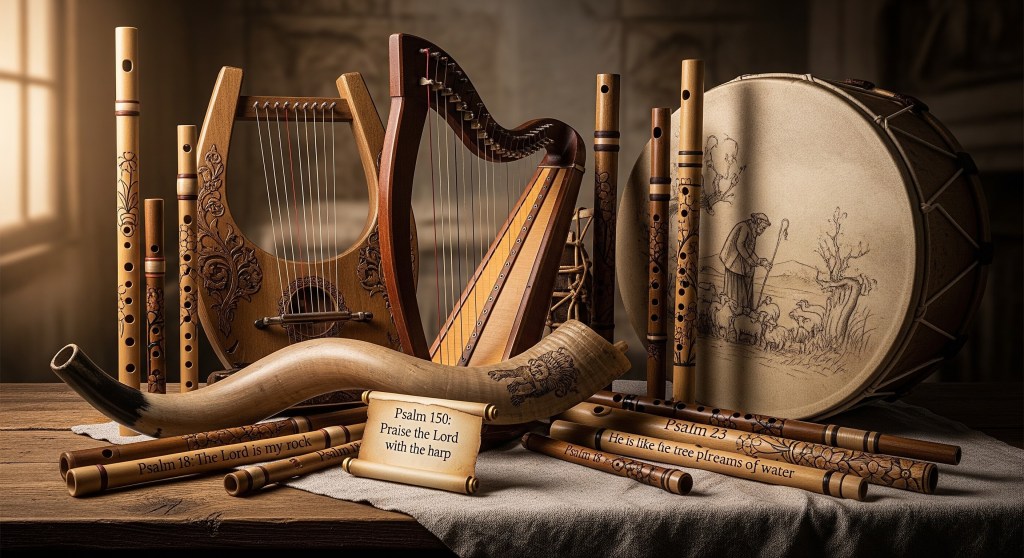
There are few things as universally connective and instantly transportive as music. A simple melody can unlock a memory tucked deep within the mind, or a powerful crescendo can stir emotions we didn’t even know we held. Think about it: a driving beat can energize a stadium of thousands, a lullaby can soothe a crying infant, and a mournful chord progression can give voice to shared grief. Music, in its purest form, is a language that bypasses the limitations of words, speaking directly to the soul. It is a profound, mysterious, and natural gift of human experience. But when this distinctive power of song is intentionally directed toward the Divine—when it becomes an act of worship—it transcends just entertainment or emotion. It becomes a spiritual channel, a powerful declaration of faith, and a deep conversation between the creature and the Creator. This is the sound of worship, and it is one of the most vital practices in the Christian life.
Connecting Heart, Mind, and Spirit.
Worshipping God through song is more than just a pleasant prelude to a sermon; it is deeply transformative, flowing from personal devotion and intimacy into a communal act. As a possible component of a personal devotional life, when we bring our intimate, one-on-one communion with God through music into the sanctuary, it can strengthen the corporate experience. It engages us on multiple levels:
- Emotional release and alignment: Music provides a necessary outlet for the full spectrum of human emotion. When we sing praises, we are giving God our joy, our gratitude, and even our struggles. The act of singing truth over our circumstances helps to align our often-chaotic emotions with the settled reality of God’s character.
- Theology set to memory: Hymns and worship songs are powerful educational tools. By setting theological truths (the nature of God, the work of Christ) to melody, these doctrines become deeply embedded in our memory. In moments of crisis or doubt, these sung truths can resurface, becoming anchors for our faith.
- Corporate unity: When a congregation sings together, they are unified in voice and purpose. This shared experience breaks down barriers and fosters a powerful sense of community, reflecting the unity of the Body of Christ.
Scriptural Resonance: The Bible’s Enduring Soundtrack.
If we want to understand the importance of singing in worship, we need look no further than the biblical library itself, which is saturated with song.
–> The Psalms: The Ancient Hymnal
The strongest biblical evidence for sung worship is, of course, the book of Psalms. Literally titled Tehillim in Hebrew, meaning “praises,” this collection of 150 sacred poems served as the official hymnbook of ancient Israel, covering every human experience imaginable—from the highest peaks of triumph to the deepest valleys of despair and confession. Significantly, the Psalms do not merely mention singing; they command it, as seen in Psalm 95:1, which declares, “Oh come, let us sing to the Lord; let us make a joyful noise to the rock of our salvation!” and Psalm 100:2, which calls us to “Serve the Lord with gladness! Come into his presence with singing!” The clear message is that song can be one of the most appropriate, joyful, and ordinary responses to God’s saving power.
–> Beyond the Psalms
The command to sing is not confined to the Old Testament; the Apostles carried this tradition forward, understanding that the sound of music—worshipping through song—was essential to the new covenant community. Ephesians 5:19 instructs believers to be “addressing one another in psalms and hymns and spiritual songs, singing and making melody to the Lord with your heart.” Similarly, Colossians 3:16 echoes this, encouraging us to “Let the word of Christ dwell in you richly, teaching and admonishing one another in all wisdom, singing psalms and hymns and spiritual songs, with thankfulness in your hearts to God.” These New Testament passages highlight two crucial elements: the act of singing is both a personal expression of thankfulness to God and a communal tool for teaching and encouraging one another. When we sing about God’s faithfulness, we are actively preaching that truth to our own hearts and to those in our spheres of influence—whether they are right next to us or miles around the world.
Let the Music Play.
I can hear someone protest and say, “But I’m not a good singer,” or “I don’t like singing in front of others,” to which I can empathize because that was me several years ago. But the freedom and gift to worship God with our singing voices is not about how well we sound. Instead, it’s about our devotion to our Lord—the One who gave himself for us so that we might be spared from the wrath to come (1 Thess. 1:10). The One through whom we now have peace with God and stand in grace (Rom. 5:1-2). And the One who has granted us access into the very throne room of God, granting us the ability to approach him in confidence (Heb. 4:16). So, I am convinced that worshipping God through song is not a trivial or optional part of faith; it is a foundational practice woven into the fabric of Scripture. It is the language of the joyful, the solace of the suffering, and the declaration of the faithful. When the community gathers, the corporate voice rises as a powerful, unified declaration of devotion, a shared experience that unites every heart and echoes the heavenly chorus that has spanned all ages. This collective sound is our corporate offering, binding us together in a common purpose and giving grander glory to the King. You might as well start practicing now since we will be singing together in heaven (Rev. 7:9-10, 19:6-8). Let the sound of music also be a personal call to deeper reflection on your relationship with the Divine, even in moments of solitude. This melody-driven meditation serves as a contemplative practice, allowing the harmonies and rhythms to quiet the noise of daily life and open a private channel for spiritual reflection. It invites you to find sacred meaning not only in shared worship but also in the quiet, private space where music becomes a direct, intimate conversation with God. This is the sacred sanctuary of individual worship.
So, the next time the music begins, whether you are standing in a crowded assembly or sitting in the quiet of your own home—engage your voice, your heart, and your mind. Let the melody transport you, let the words teach you, and let your personal offering join the great chorus. Let the sound of music be the sound of your heart giving glory to the King. The invitation still stands: come as you are, my friends, and drink from The Well!


Leave a Reply